
The Sustainable Mobility Readiness Index (SMRI)
Sustainable Mobility Readiness Index (SMRI)
The Sustainable Mobility Readiness Index (SMRI) offers a comprehensive assessment of cities' preparedness for a sustainable future. By analysing factors like infrastructure, policy, and innovation, the SMRI provides actionable insights to help cities develop eco-friendly, efficient, and socially equitable transport systems, driving progress toward a more sustainable urban landscape
Urbanisation is accelerating globally. That is placing significant strain on transportation systems, which are major contributors to environmental challenges, including air pollution and climate change. Developing sustainable urban mobility systems is crucial for addressing these challenges and advancing towards a more sustainable future.
Sustainable mobility solutions, whether they are expanded bike lanes or “Mobility as a Service” systems, help reduce greenhouse gas emissions, improve air quality, and enable cities to meet climate goals. They promote social equity by offering affordable and accessible transport options for all citizens, including low-income communities, thereby reducing dependency on personal vehicles and fostering inclusivity. Sustainable mobility also enhances economic efficiency by easing traffic congestion, saving time, and boosting productivity, while also driving the creation of green jobs and technological innovation. Moreover, they improve the overall quality of life by reducing car traffic, minimising noise pollution, and encouraging healthier lifestyles through walking and cycling in more livable urban spaces. It is not an exaggeration to say that the world’s ability to meet its ambitious net zero goals largely depends on our collective capacity to reengineer the systems that move people, goods, and services through dynamic urban centres.
Around the world, national governments and the private sector are making immense investments to develop policy frameworks and incentives to encourage sustainable mobility. And while these efforts are in some ways still in their infancy, there is a glaring need for a data-driven tool that can help assess capabilities, measure progress, and serve as a benchmark.
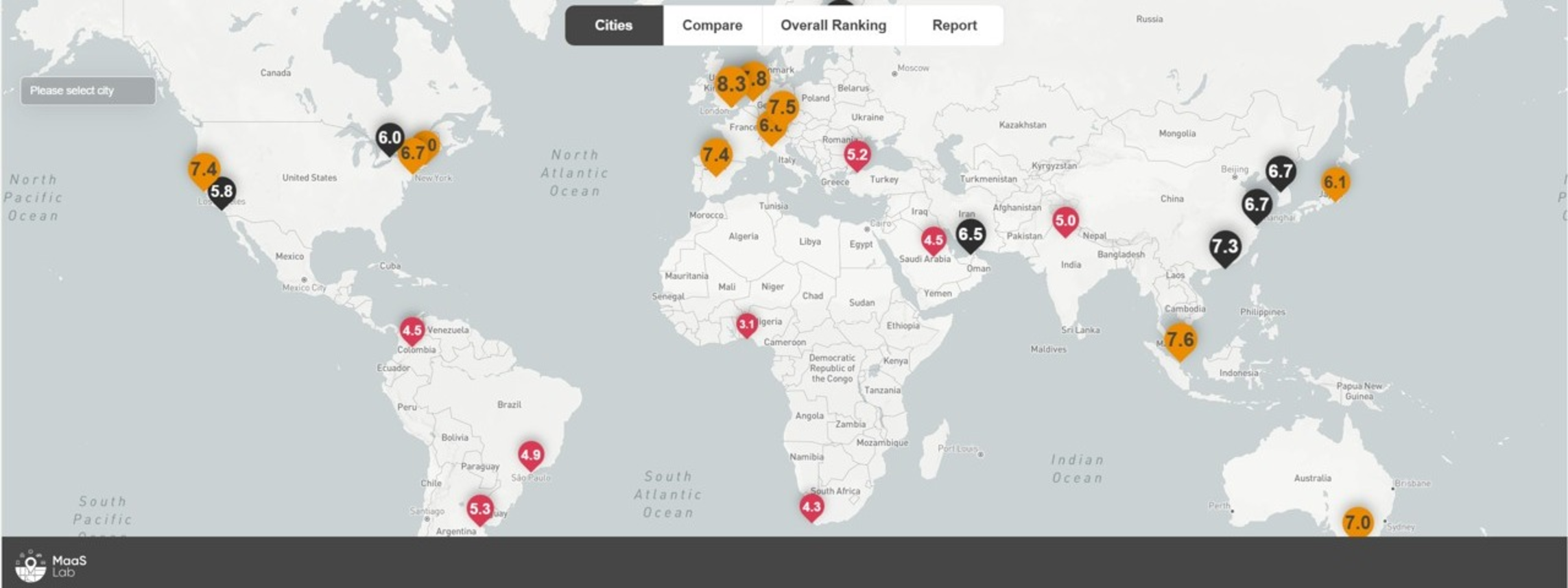
That’s why we have developed the Sustainable Mobility Readiness Index (SMRI) - a comprehensive analytical tool designed to evaluate the preparedness of cities to adopt and sustain mobility solutions that are environmentally friendly, efficient, and resilient. It assesses multiple dimensions of urban mobility, including infrastructure, innovation, policy frameworks, and environmental impact, providing a clear benchmark for cities striving toward sustainable mobility.
This index will measure and compare readiness across various regions, offering a comprehensive assessment of how well cities and regions are prepared for the transition to sustainable mobility. By highlighting gaps and areas of improvement, The index will guide policymakers, businesses, and communities in making data-driven decisions. Built on a carefully selected set of indicators representing key aspects of sustainable mobility – such as transport supply, transport demand, innovation, policies, finance, and environment and energy.
The SMRI assesses cities across three archetypes – mature, emerging, and rapidly growing - offering a comprehensive evaluation of their sustainable mobility readiness. It includes a:
- Comprehensive assessment: Offers a holistic evaluation of cities' sustainable mobility readiness, covering infrastructure, innovation, policies, and environmental impact.
- Data-driven insights: Deliver objective, data-driven analysis that helps cities understand their current standing and areas for improvement.
- Benchmarking capability: Allow cities to compare their performance with others, identifying best practices and setting goals for improvement
- Tailored recommendations: Delivers actionable insights and customised recommendations to guide cities toward achieving sustainable mobility.
- Strategic guidance: Empowers policymakers and stakeholders to make informed decisions that support the adoption of sustainable urban mobility practices.